Most people approach brushing their teeth the same way they approach washing a dish: apply product, scrub, and rinse. The assumption here is that cleaner teeth come from bristles making contact with enamel, and that more effort equals better results.
That logic holds for a manual toothbrush. It even holds for a standard electric one. But it breaks down when you introduce a sonic toothbrush. Once you understand the science, you'll never think about brushing the same way again.
Here’s what happens when you switch to a sonic toothbrush.
Your Mouth Becomes a Fluid Dynamic Cleaning Environment
When you use a sonic toothbrush, the bristles don’t do most of the work. (Counterintuitive, we know).
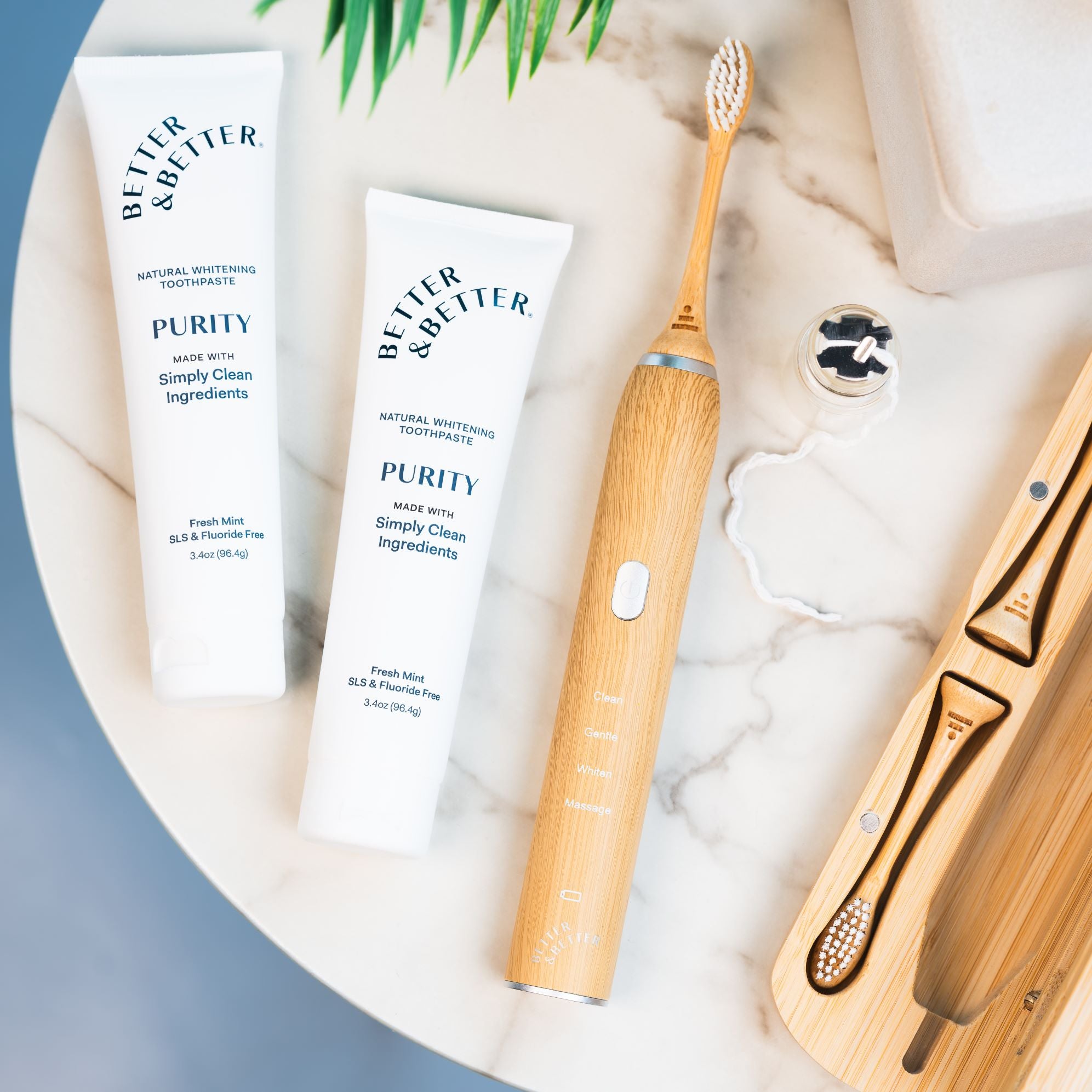
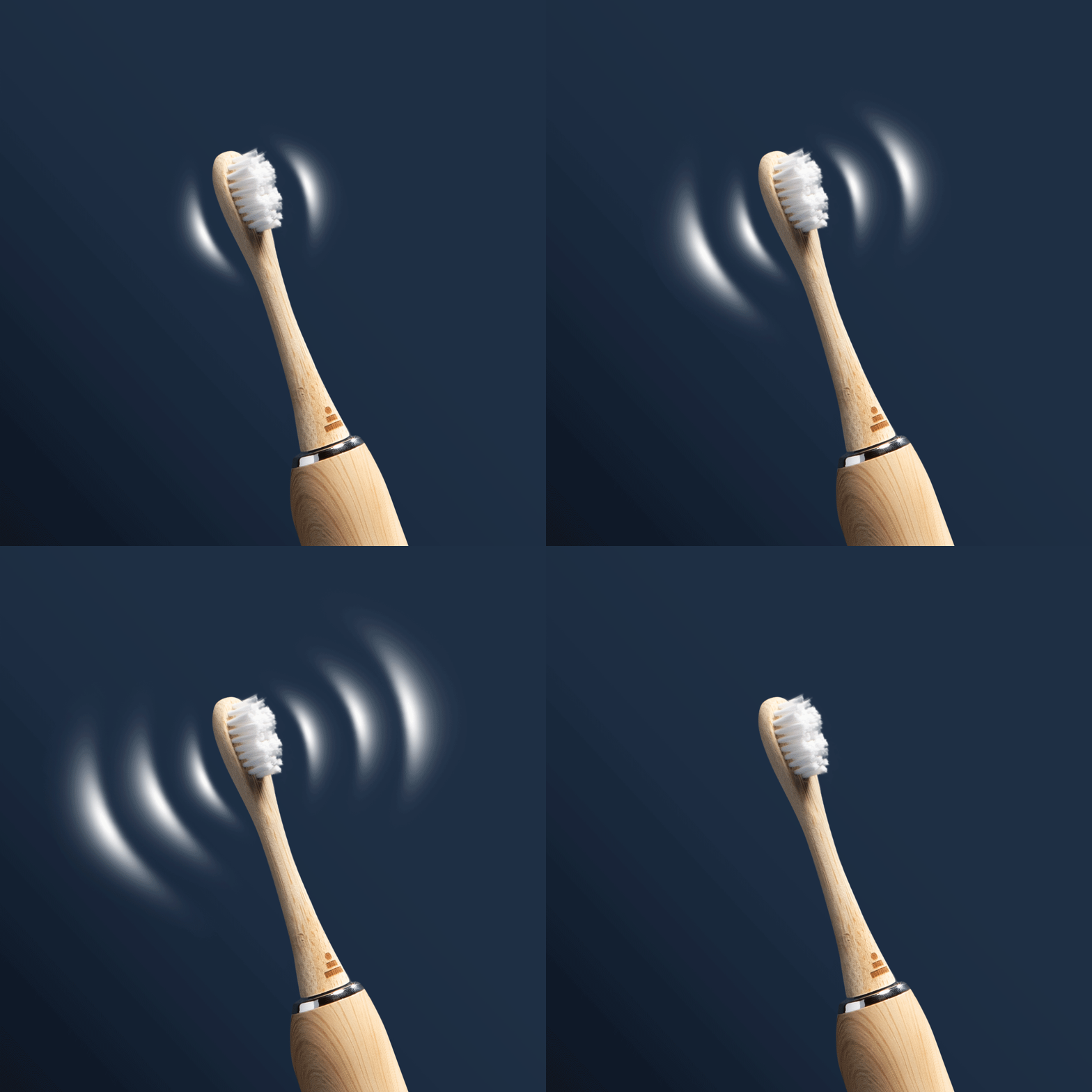
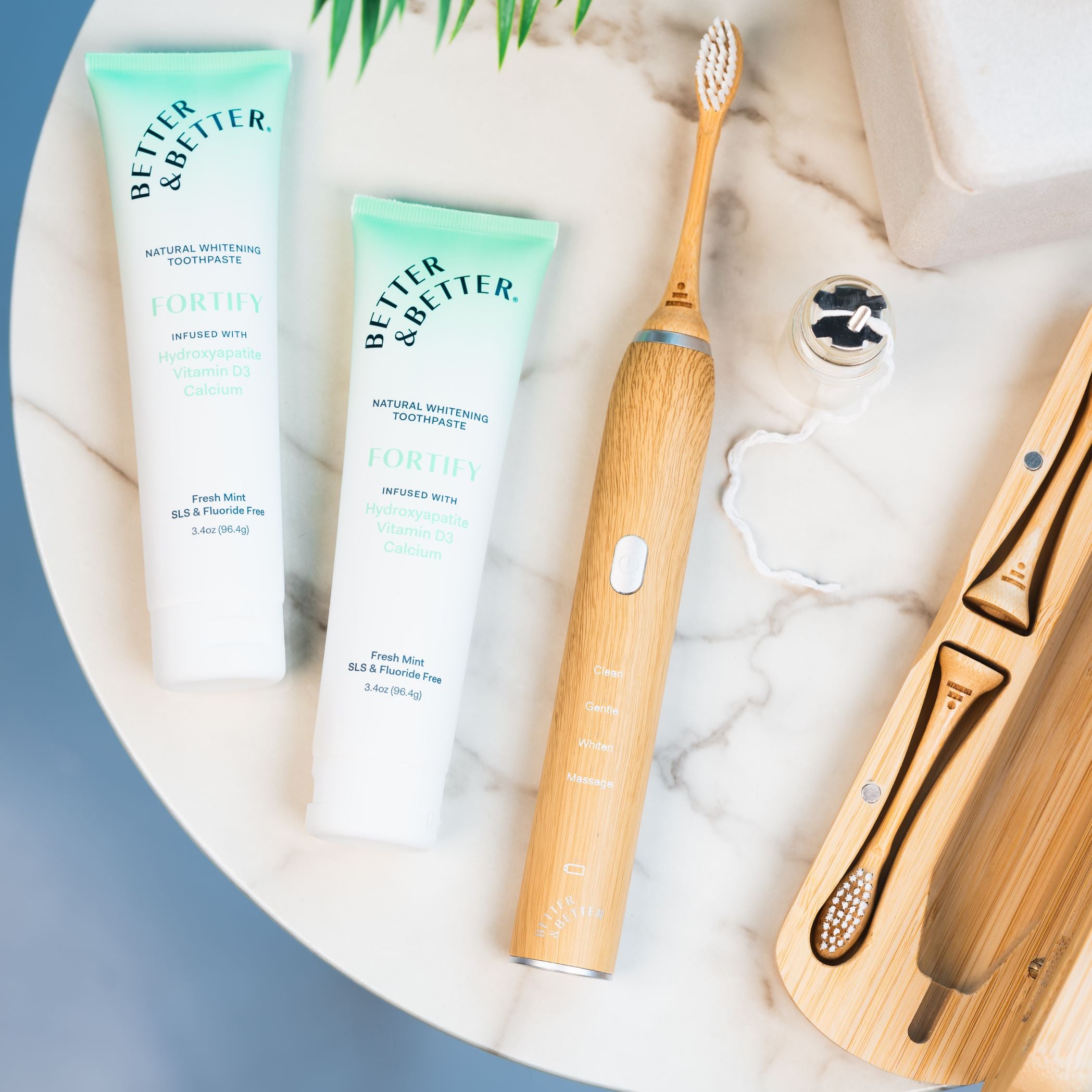
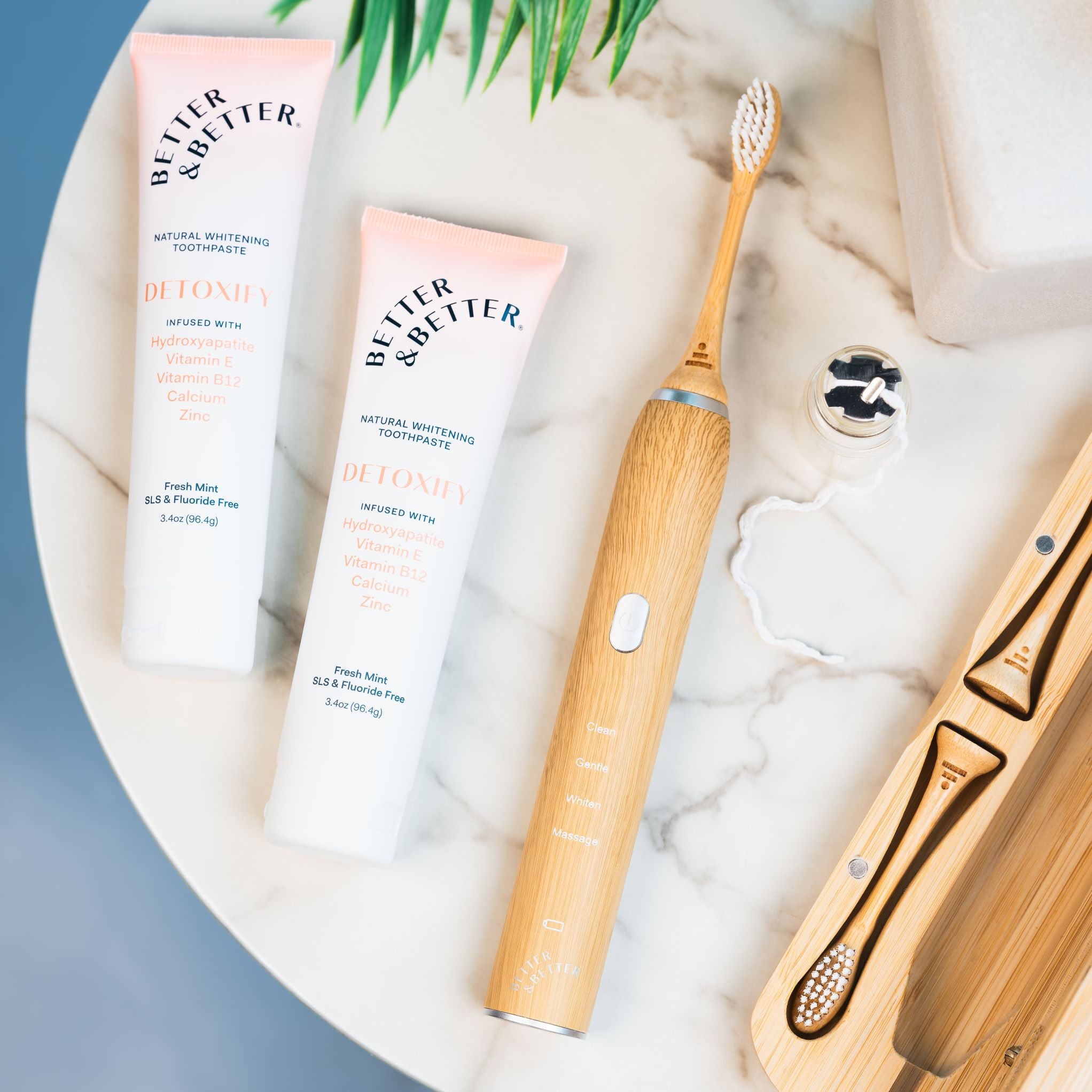
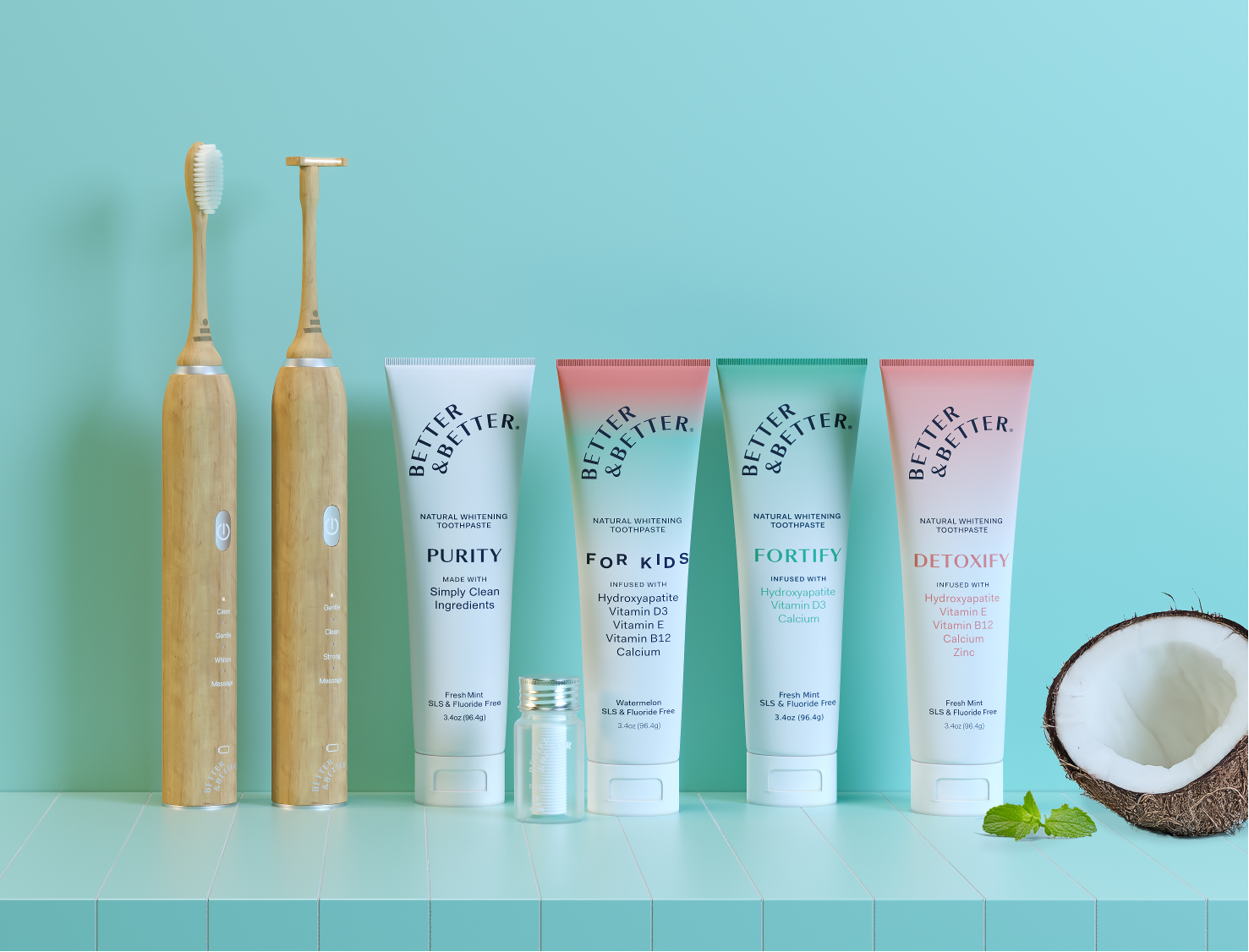
The Better & Better Sonic Toothbrush delivers up to 37,000 microvibrations per minute, agitating the mixture of saliva and toothpaste in your mouth. That turbulence creates a hydrodynamic cleaning action that reaches places bristles don’t physically touch: the gaps between teeth, the base of the gumline, the shallow pockets where periodontal disease begins.

Think of a garden hose versus a power washer. A garden hose cleans by contact; a power washer creates enough pressure and turbulence that debris dislodges from crevices the nozzle never reaches.
A standard electric toothbrush runs between 2,500 and 7,000 strokes per minute—and even then, it's spinning or pulsing its brush head to improve contact cleaning. Better than manual brushing, but still a contact sport. The fluid dynamic effect from sonic frequency produces a different category of clean entirely.
Plaque Gets Disrupted Where Your Bristles Aren't
The result of fluid turbulence is plaque removal in places you'd normally miss, no matter how diligent you are.
The clinical evidence backs this up. A randomized controlled trial published in the Journal of Clinical Dentistry followed 66 adults with moderate periodontitis for six months, splitting them between sonic and standard electric toothbrushes. The sonic group ended the trial with significantly less interdental plaque (the kind that lives between your teeth, where bristles from any brush struggle to reach consistently).
A 2017 meta-analysis of 18 separate studies landed in the same place: Sonic-powered toothbrushes decreased plaque significantly more effectively than manual toothbrushes after three months of daily use.
When you use the Better & Better Sonic Toothbrush on its default Clean mode, this is exactly what's happening below the surface (or more precisely, between the teeth) during every session.
Your Gumline Gets Stimulated, Not Just Cleaned
Gum tissue, like any tissue, benefits from circulation. Consistent, gentle stimulation along the gumline promotes blood flow, supports tissue resilience, and helps the body resist infection.
The Better & Better Sonic Toothbrush delivers that stimulation as a byproduct of normal brushing in any mode. But it also dedicates an entire cleaning mode—Massage—to this specific outcome, dialing the vibration frequency to optimize for tissue stimulation rather than plaque disruption.
This isn't cosmetic. In the same Journal of Clinical Dentistry trial, the sonic group reduced gum inflammation by 31.9% over six months, compared to 18.1% in the standard electric toothbrush group. That’s nearly double the improvement with the same brushing time.
Your Enamel Gets Polished at a Microscopic Level
If you've used our sonic toothbrush, you’ve probably noticed that your teeth feel unusually smooth afterward—almost like a professional cleaning. That’s because of the micro-polishing effect of 37,000 microvibrations per minute working across your enamel surfaces, and it's exactly what the Whiten mode is built around.
The distinction from abrasive whitening toothpastes matters here. Whitening pastes work by friction: Tiny abrasive particles physically scrape surface staining away, which can wear down enamel over time.
The Whiten mode on our sonic toothbrush works differently. The fluid turbulence lifts surface staining without the abrasive friction, which is why the brush is safe for braces, fillings, crowns, veneers, and implants—surfaces that aggressive abrasive brushing can gradually compromise.

For anyone with dental restorations, it’s the reason this brush works where others require caution.
Your Dentist Can't Be There Every Day. Your Toothbrush Can.
Optimal oral health isn’t locked behind professional treatments or twice-yearly dentist visits. It’s available every morning and every night, in two minutes, in your bathroom. Periodontal disease affects nearly half of adults over 30 in the United States, and the research is consistent that most of that damage accumulates gradually, in the interdental spaces and along the gumline that manual and standard electric brushes chronically under-clean.
A sonic toothbrush can’t replace your dentist. But it can close the gap between visits in a way that no amount of careful manual brushing can.
Common Questions About Sonic Toothbrushes
Do sonic toothbrushes clean better than manual toothbrushes?
Sonic toothbrushes help improve consistency by using rapid microvibrations to disrupt plaque more evenly across the teeth and gumline. Many people also naturally brush longer and more thoroughly with built-in timers and interval pacing.
Can sonic toothbrushes damage enamel?
When used properly, sonic toothbrushes are generally gentler on enamel than aggressive manual brushing. The goal is less pressure, not more.
Why do my teeth feel smoother after sonic brushing?
Sonic microvibrations help polish away surface buildup and plaque film, leaving the enamel surface feeling cleaner and less textured.
Are sonic toothbrushes safe for braces and veneers?
Yes. The Better & Better Bamboo Sonic Toothbrush is designed to safely clean around braces, crowns, veneers, fillings, and implants while maintaining gentler pressure.
How hard should you press with a sonic toothbrush?
Much lighter than most people think. Sonic brushes work best when you guide them slowly across the teeth instead of scrubbing aggressively.